
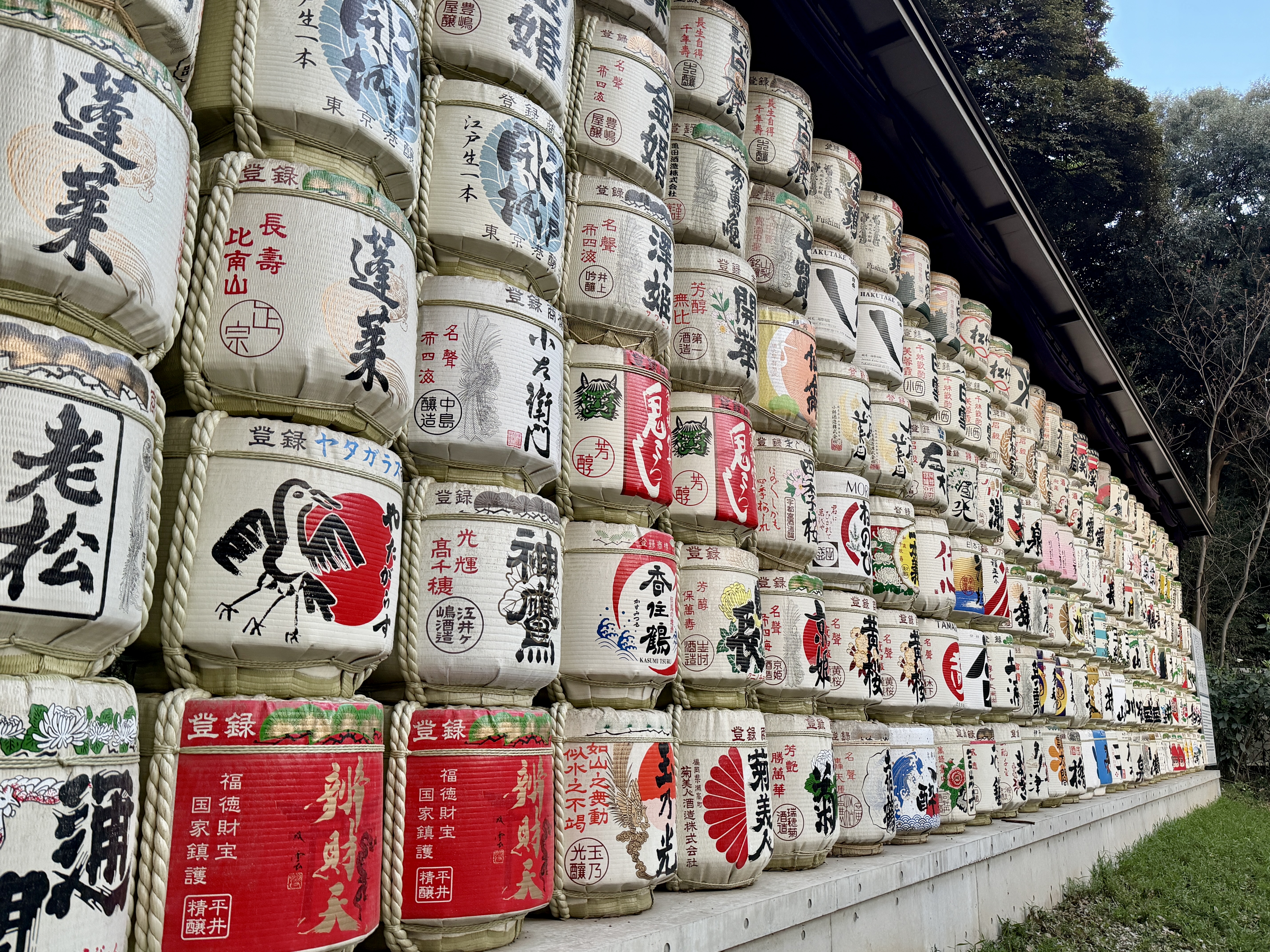
There is a well-known saying among photographers:
The best camera is the one you have with you.
It sounds simplistic, but after my latest trip to Japan, the idea of using the iPhone 18 Pro Max as a travel camera is particularly interesting to me.
For some time, I used the Fujifilm X100VI to document my travels. It is a beautiful camera, relatively compact, and capable of producing photographs with far more character than most smartphones.
But during our trip to Japan, I began to notice the weight.
The X100VI is not particularly heavy by traditional camera standards. Still, after hours of walking through Tokyo, Kyoto and Osaka, carrying it around my neck or inside a bag started to feel surprisingly uncomfortable.
When you are travelling all day, even a relatively light camera becomes another object to carry, protect, charge and remember.
That experience eventually led me to buy a Ricoh GR IV as a more discreet and portable travel companion.
But it also made me reconsider the device that was already with me every minute of the journey: my phone.
At the time, I was using an iPhone 17 Pro, and I already considered it an excellent travel camera.
It was always charged, always connected and, most importantly, always in my pocket.
That is why the early rumours surrounding the iPhone 18 Pro Max are particularly interesting to me.

If Apple really introduces a variable-aperture main camera, the next iPhone may not replace every dedicated camera. But it could become the most practical travel camera Apple has ever produced.
Rumour tracker — updated 20 July 2026: Apple has not officially announced the iPhone 18 Pro Max. The information below is based on leaks and industry reporting and should be treated as unconfirmed.
Why dedicated cameras can become tiring while travelling
There is something special about travelling with a real camera.
A dedicated camera encourages you to slow down, observe light and think more carefully about composition. It also creates a clearer separation between taking a photograph and simply recording a moment.
The Fujifilm X100VI is especially attractive for travel because it offers:
- excellent image quality;
- a compact fixed lens;
- physical controls;
- Fujifilm film simulations;
- a traditional photographic experience.
On paper, it is close to the perfect travel camera.
But travel does not happen on paper.
During a full day exploring a city, you may already be carrying:
- a bottle of water;
- a jacket;
- power banks;
- tickets and documents;
- items for the children;
- shopping;
- additional lenses or accessories;
- a backpack or shoulder bag.
The camera may only add a few hundred grams, but those grams stay with you for eight, ten or twelve hours.
In Japan, I found myself occasionally leaving the Fujifilm in the hotel because I did not want to carry it all day.
And the moment a camera stays in the hotel, its superior image quality becomes irrelevant.
Why I bought the Ricoh GR IV
The Ricoh GR series represents a different approach.
Instead of trying to offer every possible feature, it focuses on portability, image quality and discretion.
The main attraction for me was simple: it is small enough to carry without constantly feeling that I am carrying camera equipment.
That matters when travelling.
A camera that fits easily into a jacket pocket or compact bag is more likely to accompany you to dinner, on an evening walk or during an unplanned detour.
The Ricoh gives me a dedicated photographic tool without the same physical burden as the Fujifilm.
However, even a small camera remains another device.
It still requires:
- a separate battery;
- a memory card;
- file transfers;
- charging;
- storage;
- some degree of protection.
The iPhone removes almost all of that friction.
My experience with the iPhone 17 Pro
Before looking at the iPhone 18 rumours, it is important to acknowledge how capable recent iPhones already are.
I used an iPhone 17 Pro, and for everyday travel photography, I found it genuinely impressive.
It was particularly useful for:
- quick family photographs;
- street scenes;
- video clips;
- food photography;
- panoramas;
- navigation screenshots;
- photographs taken in situations where using a dedicated camera would attract attention;
- moments that happened too quickly to prepare another camera.
The greatest advantage was not necessarily absolute image quality.
It was availability.
The phone was always with me, always accessible and ready within seconds.
That changes the type of photographs you take.
With a dedicated camera, you may consciously decide to go out and photograph.
With a smartphone, you also capture all the small moments in between:
- a child asleep on a train;
- an unexpected view from a taxi;
- a restaurant hidden in a side street;
- luggage piled beside a station platform;
- a reflection in a shop window;
- the last light of the day while walking back to the hotel.
These images often become as important as the technically superior photographs.
What could change with the iPhone 18 Pro Max?
Recent industry reporting, based on leaked diagnostic information, suggests that Apple may be testing a new Sony main sensor and a physical variable-aperture mechanism. These details remain unconfirmed.
Unlike most current smartphone cameras, which use a fixed aperture and rely heavily on computational processing, a variable aperture could physically control how much light reaches the sensor.
In simple terms:
- a wider aperture could allow more light into the camera;
- a narrower aperture could reduce light in bright conditions;
- changing the aperture could influence depth of field and sharpness.
This technology already exists in some Android devices, but it would be a first for the iPhone.

Why variable aperture matters for travel
Travel photography constantly moves between difficult lighting conditions.
On a single day, you might photograph:
- a dark temple interior;
- a bright beach;
- a family portrait;
- a restaurant at night;
- street lights after sunset;
- a landscape under harsh midday sun;
- a moving subject inside a station.
A variable aperture could give the camera more flexibility before Apple’s image processing even begins.
Better photographs at night
A wider aperture can allow more light to reach the sensor.
That could help in restaurants, narrow streets, hotel rooms and evening scenes where smartphones sometimes create overly processed or unnatural images.
Japan is an excellent example.
Tokyo at night is full of neon signs, illuminated streets, dark alleys and strong contrasts. These scenes are visually spectacular but technically difficult.
If the iPhone 18 Pro Max can manage light more naturally, it could become a very capable tool for this kind of travel photography.
More natural portraits
Current iPhones can create convincing portrait blur, but much of it is produced computationally.
Software occasionally struggles with:
- hair;
- glasses;
- complex backgrounds;
- transparent objects;
- fine details around clothing.
A physical aperture could potentially create more natural subject separation before software processing is applied.
It will not replicate the depth of field of a large-sensor camera, but it could reduce the artificial look that sometimes appears in smartphone portraits.
Better performance in bright sunlight
Travel photography is not only about low light.
Bright beaches, snow, deserts and summer cities create another challenge: too much light.
A narrower aperture may allow the camera to control exposure more effectively and potentially produce sharper images across more of the frame.
Greater video flexibility
For many travellers, video is now as important as photography.
A phone may be used for:
- family videos;
- Instagram Reels;
- YouTube Shorts;
- hotel reviews;
- restaurant clips;
- walking tours;
- short travel documentaries.
A variable aperture could help when moving between very different lighting conditions, although we still do not know whether Apple will allow manual aperture control during video recording.
Could it replace my Fujifilm or Ricoh?
Probably not entirely.
A dedicated camera still provides advantages that a smartphone cannot fully reproduce:
- larger sensors;
- better highlight recovery;
- more natural detail;
- physical controls;
- less aggressive processing;
- stronger RAW flexibility;
- a more deliberate photographic experience.
The Fujifilm X100VI creates files with a character and depth that a smartphone may struggle to match.
The Ricoh GR IV offers genuine camera image quality in an unusually compact form.
But replacement is not necessarily the right question.
The better question is:
Which camera am I most likely to carry every day of the trip?
For a photography-focused morning or planned city walk, I may still choose the Fujifilm or Ricoh.
For a full family travel day involving trains, restaurants, museums, shopping and long walks, the iPhone may be the more sensible tool.
The importance of travelling light
My experience in Japan reinforced a simple lesson: photography equipment should support the trip, not become a burden.
There is always a temptation to prepare for every photographic possibility.
You bring a better camera because the trip is important. Then perhaps an extra battery, charger, strap, filter or small tripod.
Eventually, the equipment starts affecting the experience.
You may worry about:
- leaving the camera unattended;
- rain;
- theft;
- damaging it in crowded transport;
- whether a location allows photography;
- where to store it during meals;
- carrying it during long walks.
A smartphone avoids much of this.
You are already carrying it for maps, tickets, communication, payments and reservations.
Using it as your main camera does not add another object to the journey.
The price may be difficult to justify
Some industry estimates suggest that the additional camera hardware could contribute to a higher launch price, although Apple has not announced pricing or the device itself.
That raises an obvious travel-related question:
Would the additional money be better spent on the phone or on the trip itself?
The iPhone 18 Pro Max will need to deliver a meaningful photographic improvement, not merely a more complex specification.
Who should consider waiting for it?
The iPhone 18 Pro Max could be especially interesting for travellers who:
- take most of their photographs with a phone;
- want to reduce the amount of equipment they carry;
- create both photographs and video;
- keep their phones for several years;
- regularly travel with children;
- value convenience more than maximum image quality;
- currently use an older iPhone.
It may be less compelling for people who:
- already own a recent Pro model;
- primarily photograph with a dedicated camera;
- prefer unprocessed RAW files;
- need long optical telephoto reach;
- are satisfied with their current smartphone camera.
What we still need to know
The most important details remain unknown:
- What aperture values will be available?
- Will users be able to choose the aperture manually?
- Will the feature appear on both Pro models?
- Will it work during video recording?
- How much larger or better will the sensor be?
- Will the improvement be visible without pixel-peeping?
- What will the European price be?
- Will battery life improve?
- How much processing will Apple continue to apply?
Until Apple officially announces the device and independent photographers test it, any conclusion remains provisional.
My current travel-camera setup
At the moment, my travel-photography choices reflect three different priorities.
Fujifilm X100VI
For days when photography itself is a central part of the plan.
Ricoh GR IV
For high image quality in the smallest practical dedicated-camera package.
Smartphone
For the moments when speed, convenience and availability matter most.
The iPhone 18 Pro Max could make the third option considerably stronger.
Final thoughts
I still love travelling with a dedicated camera.
The process is different, the files are better and using a real camera encourages a more intentional form of photography.
But Japan reminded me that even a relatively light camera can become tiring after several full days of walking.
The Ricoh GR IV may solve much of that problem by giving me proper camera image quality in a much smaller body.
Even so, no dedicated camera can compete with the one advantage of an iPhone:
it is already in my pocket.
If Apple combines that convenience with a genuinely improved main camera and variable aperture, the iPhone 18 Pro Max could become one of the most interesting travel cameras of 2026.
Whether the iPhone 18 Pro Max becomes my main travel camera will depend on the real-world image quality, price and portability.
Not necessarily because it will produce the best possible photograph.
But because it may be the camera I am most likely to have with me when the photograph happens.



Leave a Reply