
This post contains affiliate links. If you book through them we may earn a small commission, at no extra cost to you. More in our Affiliate Disclosure.
Over the years I have owned three Leicas: the original Leica Q (Typ 116), a Leica M (Typ 240) and a Leica M11. I loved all three. If you ask me which one gives me the JPGs I like most straight out of camera, the answer is still the M240.
This post is about the M-mount lenses I have actually used for travel, and what 35mm, 50mm and 90mm look like on real trips: Norway in November 2026, northern Italy in June 2025, plus earlier 35mm and 50mm frames from Athens, Crete, Porto and Fonte da Telha, near Lisbon. It is a companion to Leica M11 for Travel Photography, Leica M240 in 2026, Leica Q vs M240 vs M11 for Travel and Leica Q (Typ 116) for Travel Photography. The Norway itinerary from that week is in Norway in November: Our Bergen, Fjords and Oslo Itinerary.
Short answer: 35mm is the focal length I use most, and it is my favourite for travel because it is light. On the M11 that 35mm is a Voigtländer Ultron 35mm f/2, not a Leica Summicron, even when the EXIF says otherwise. The 50mm I use on the M11 is a Summicron-M 50mm f/2. In Norway I also used a Tele-Elmarit 90mm f/2.8. The 50mm on the M240, in Italy, was a Zeiss C Sonnar 50.

A note on the EXIF (please read this first)
Leica M cameras write a lens name into the file. That field is a profile. It is not always a receipt for the glass that was on the camera.
As I already noted in the M11 post and the three-camera comparison: on many 35mm frames the camera writes “Summicron-M 35”, even when the lens was the Voigtländer Ultron. On M240 files from Italy and Folgosinho it writes “Summilux-M 50”, even though those frames were shot with a Zeiss C Sonnar 50. The 50mm frames on the M11 correctly show a Summicron-M 50 profile, matching the Leica 50mm f/2. The 90mm Norway frames are written as Tele-Elmarit 1:2.8/90, a name that does not clash with anything else I have already published.
The counts below are from the original files, counting only those whose EXIF LensModel field is filled: 360 frames tagged Summicron-M 35 (September to November 2026), 53 tagged Summicron-M 50, 125 tagged Tele-Elmarit 90 (Norway, 10–12 November 2026), and 12 M240 files from Italy in June 2025 tagged Summilux-M 50. I am not treating the 35mm or the M240 50mm tags as proof that I used a Leica Summicron 35 or a Summilux 50.
One more technical note. On the M11 JPEGs the FNumber field is often written as f/1.0, which is not a real shooting aperture for these lenses. Where I quote an aperture for an M11 frame, it is the ApertureValue from the same file. The M11 frames in this post are straight-out-of-camera JPEGs. The M240 frames from Italy were exported from Lightroom, so they are not SOOC.
35mm: the Voigtländer Ultron, the lens that stays on the camera
When the M11 comes on a trip, the 35mm stays on the camera most of the time. It is my favourite travel focal length because it is light. The lens is a Voigtländer Ultron 35mm f/2. The current Ultron 35mm f/2 II is specified at about 210 g, with a 39 mm (E39) filter thread (Cosina / Voigtländer technical data).
That is a lot less money and a little less weight than a Leica Summicron-M 35mm f/2 ASPH., which is listed new at around $4,300 in the US in late 2026, with used copies typically around $2,200–$2,850, or a 30-day used median near €2,780 on Leica Lens List in November 2026. The Ultron II is listed new at around €750; used copies in November 2026 sat in a similar band, with a 30-day median around €760.
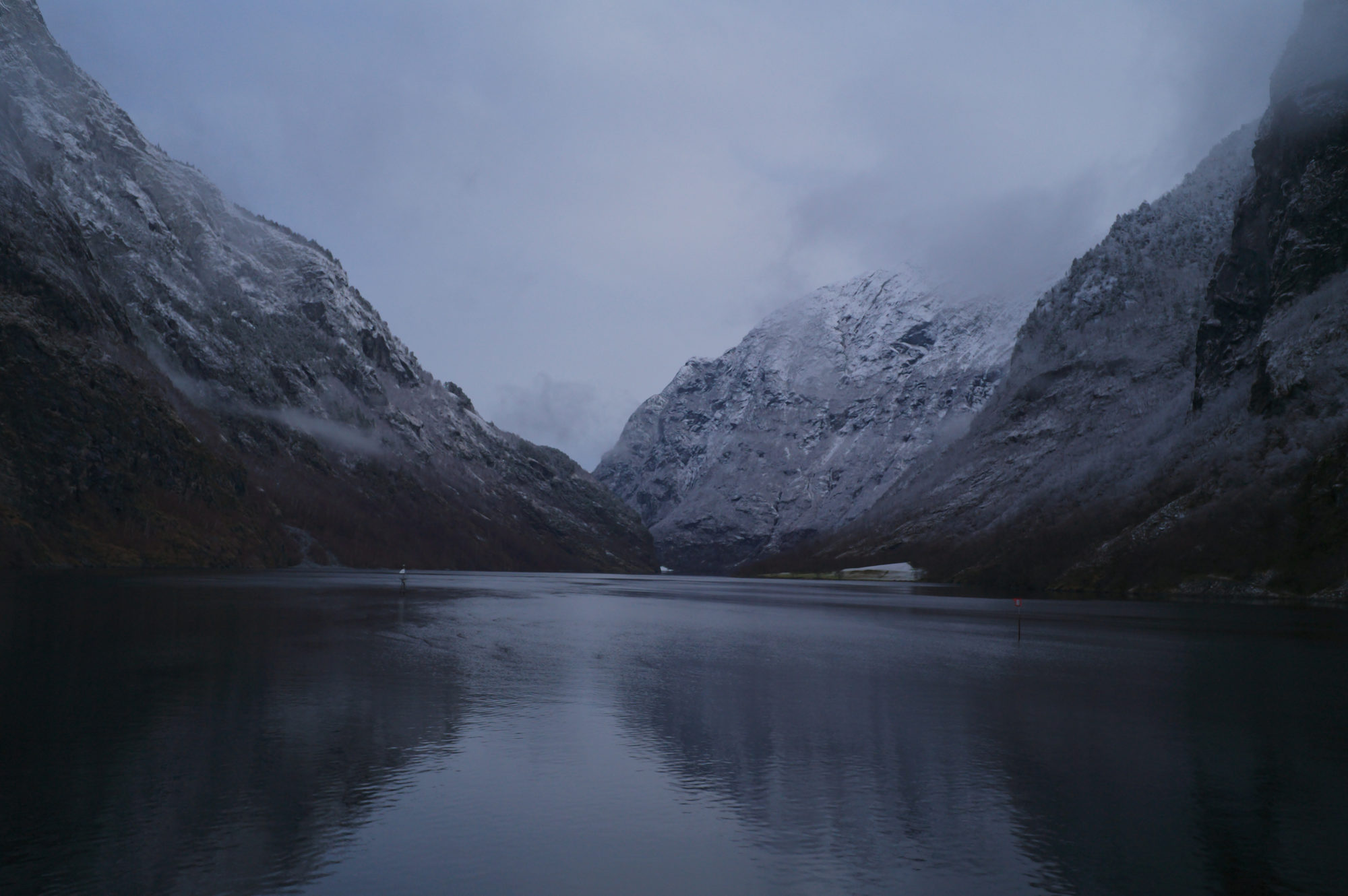
What 35mm was good for is simply what the files show. It is wide enough for a fjord at Gudvangen, a hillside view over Bergen and a waterfront at sunset in Oslo, without forcing you to stand in the road to fit a street in. On the M11 the 35mm tag is the most common one in the set: 360 frames between 5 September and 14 November 2026, including Athens on 5 September, Crete on 12 September, Porto on 4 October, and Norway from 10 to 14 November. The Athens and Crete 35mm frames are already in the M11 gallery, credited as the Ultron.
If you are going to the Acropolis, a guided Acropolis and Acropolis Museum tour on GetYourGuide is a straightforward way to visit, and you can compare places to stay in Athens. More of those September frames, and breakfast below the hill, are in our OLYN Athens post.


50mm on the M11: the Summicron-M 50mm f/2
The tighter everyday lens on the M11 is a Leica Summicron-M 50mm f/2. This is the one EXIF profile I have already described as reliable. It is a compact standard lens: about 240 g, 43.5 mm long, with a 39 mm (E39) filter thread and a built-in telescopic hood, focusing from 0.7 m (Leica / current dealer specifications).
New, it is listed at about $3,205 in the US in late 2026 (B&H and other dealers). Used copies in November 2026 started around €1,200, with a 30-day median near €1,630 on Leica Lens List; MPB in the US had copies roughly in the $1,500–$1,700 range.
On this set it appears on 53 frames: three at Fonte da Telha, on the Costa da Caparica south of Lisbon, on 31 October 2026, and 50 in Norway on 10 and 11 November, including Bryggen in daylight and the shore at Åsane, just north of the city. A 50mm is a natural step in from 35mm for a harbour front or a tighter view from a boat. The Fonte da Telha frames, and staying on that stretch of coast, are in Lisbon in November and Fonte da Telha.


50mm on the M240: the Zeiss C Sonnar in Italy
The 12 M240 files I have from our June 2025 trip to northern Italy are all 50mm, and they are Lightroom exports, not straight-out-of-camera JPEGs. The camera wrote “Summilux-M 50” into those files. The lens on the camera, as already stated in the comparison post, was a Zeiss C Sonnar 50.
The widely sold C Sonnar T* 50mm f/1.5 ZM is specified at about 250 g, with a 46 mm filter thread (Zeiss technical data). It is no longer a current Zeiss catalogue staple in the same way as a new Summicron 50; in November 2026, used copies were typically listed around €500–€800, or about $700.
We spent 7 June 2025 walking around Verona, including the Arena, and 10 June on Lake Garda, including Sirmione. A 50mm on a rangefinder is a tight, natural way to see a city and a lakeshore: arches against the sky, a jetty, a facade on the water. The fuller set from that trip is in Leica M240 in 2026, and the road-trip context is in our northern Italy itinerary. If you are planning the same lakes, you can compare places to stay in Sirmione.


90mm: the Tele-Elmarit in Norway
The longest lens in this set is a Leica Tele-Elmarit 90mm f/2.8. It is written into 125 original files from Norway, between 10 and 12 November 2026: Bryggen at dusk, a red boathouse on Osterøy, the village of Undredal across the water, and a ferry near Aurlandsvangen.
This is a discontinued lens, so there is no current official new price. The later, compact “thin” Tele-Elmarit-M is the version most often listed today: about 225 g, 39 mm (E39) filters, 4 elements in 4 groups, focusing from 1 m (Leica Wiki and contemporary listings). There was also an earlier, heavier “fat” Tele-Elmarit with a different filter size; the EXIF on these files only names the lens, not the version. In November 2026, used listings on Leica Lens List started around €240, with a 30-day median near €610.
What it was good for on that trip is the obvious 90mm job: pulling a village into the mountain wall, isolating a boathouse, or tightening the harbour at dusk without carrying a modern 90mm that weighs twice as much. It is slower than a Summicron 90 and it does not focus as close as a 50, but in this kit it is the light way to get reach.
If you are covering the same stretch of fjord, this Nærøyfjord cruise and Flåm Railway day trip from Bergen on GetYourGuide is one way to see Gudvangen and Flåm in a day. You can also compare places to stay in Bergen or in Oslo.


Which lens for which traveller
- If you want one lens for travel on an M: start at 35mm. It is the focal length I use most, and the Ultron 35mm f/2 is light enough to leave on the camera all day. A 35mm will do a fjord, a city from a hillside and a street without much fuss.
- If you want a tighter everyday frame: a 50mm is the obvious second lens. The current Summicron-M 50mm f/2 is still in production, compact, and easier to buy new or used than a fast 50. It is the 50mm I used on the M11 in Bergen and at Fonte da Telha.
- If you want reach without a heavy telephoto: a used Tele-Elmarit 90mm f/2.8 is one of the lightest 90mm M options. It earned its place in Norway for villages and details across the water. It is discontinued, so you are buying used, and you should check the version and the condition of the glass.
- If you are looking at a fast 50 for an older M: do not assume a “Summilux-M 50” in someone else’s EXIF (or mine) means a Summilux was on the camera. On my M240 those Italy files were a Zeiss C Sonnar 50.
You do not need all three focal lengths. My usual M11 pairing, as already described in the M11 post, is the Ultron 35mm and the Summicron 50mm f/2. The 90mm is the extra reach I actually used in Norway, not a requirement for every trip.
FAQ
The EXIF on my files, or on yours, says Summicron-M 35 or Summilux-M 50. Is that the lens?
Not necessarily. On a digital M you can assign a lens profile, and some uncoded lenses are often set to a nearby Leica profile. Treat the field as a clue, then confirm the glass. I have already published the same caveat for my own 35mm and M240 50mm files.
What do you actually carry on the M11?
A Voigtländer Ultron 35mm f/2 — my favourite travel focal length, because it is light — and a Leica Summicron-M 50mm f/2 when I want a tighter frame. In Norway in November 2026 the files also show a Tele-Elmarit 90mm f/2.8.
How heavy are these lenses, and what filters do they take?
Approximate figures from the makers’ data: Ultron 35mm f/2 II, about 210 g, E39; Summicron-M 50mm f/2, about 240 g, E39; thin Tele-Elmarit-M 90mm f/2.8, about 225 g, E39; Zeiss C Sonnar T* 50mm f/1.5 ZM, about 250 g, 46 mm. A 39 mm filter set covers the three M11 lenses above if the 90mm is the thin version.
Is the Tele-Elmarit 90mm still made?
No. You will only find it used. Prices in November 2026 were typically a few hundred euros, with a 30-day median around €610 on Leica Lens List, depending on condition and version.
Do you prefer the M240 or the M11 for colour?
I loved all three Leicas I have owned. For JPGs straight out of camera, I still prefer the M240’s colour to the M11’s. That is about the bodies, not about these lenses.
Where can I read about the cameras themselves?
The body-level notes are in Leica M11 for Travel Photography, Leica M240 in 2026, the Q vs M240 vs M11 comparison, and the original Q in Ireland. For habits that work with any camera, here are 10 travel photography tips for beginners.
Keep reading
- Leica M11 for Travel Photography: Honest Notes from Real Trips
- Leica M240 in 2026: Is It Still Worth It as a Travel Camera?
- Leica Q vs M240 vs M11 for Travel
- Leica Q (Typ 116) for Travel Photography: A Fixed 28mm in Ireland
- Athens Acropolis photos from the M11
- Lisbon in November and Fonte da Telha
- Northern Italy itinerary: Bergamo to Milan
- Travel photography tips for beginners
Sources
- Cosina: Ultron Vintage Line 35mm F2 Aspherical (weight and filter size)
- B&H: Leica Summicron-M 50mm f/2 (current new price and specifications)
- Leica: Summicron-M 35mm f/2 ASPH. technical data (PDF)
- Leica Wiki: 90mm f/2.8 Tele-Elmarit-M (thin version specifications)
- ZEISS: C Sonnar T* 1,5/50 ZM technical data (PDF)
- Leica Lens List: Summicron-M 35mm f/2 ASPH. II used prices, November 2026
- Leica Lens List: Summicron-M 50mm f/2 V used prices, November 2026
- Leica Lens List: Tele-Elmarit-M 90mm f/2.8 used prices, November 2026
- Leica Lens List: Voigtländer Ultron 35mm f/2 II used prices, November 2026
- Leica Lens List: Zeiss C Sonnar T* 50mm f/1.5 ZM used prices
- Roberts Camera / Leica dealers: Summicron-M 35mm f/2 ASPH. new US listings, late 2026
Leave a Reply